
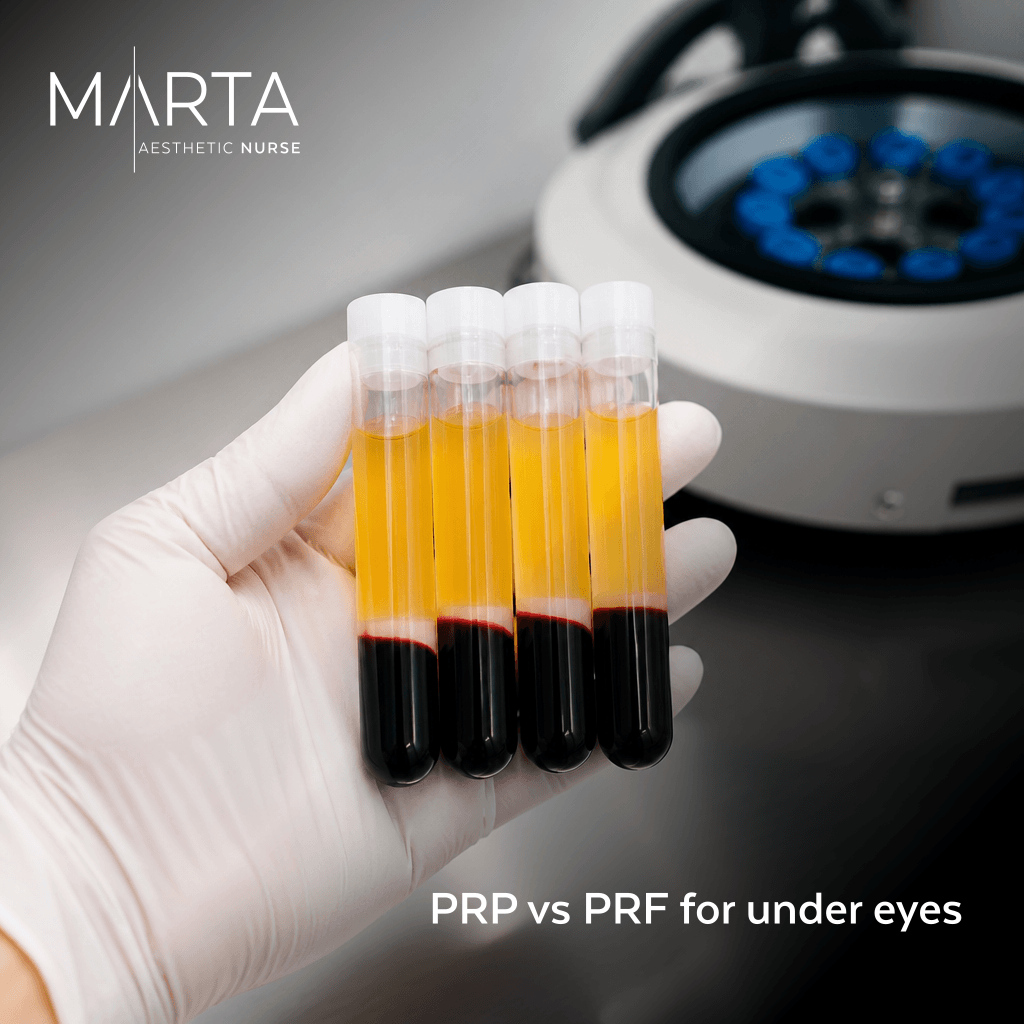
What the research says about periorbital skin quality, limits, and planning sessions
If you are trying to decide between PRP vs PRF under eyes, the first helpful step is to name what you are actually trying to change. Many under eye concerns fall into two buckets: skin quality changes (for example how the skin looks and behaves), and structural hollowness (the contour of the tear trough area).
PRP and PRF are both autologous blood derived preparations that are used in periorbital rejuvenation. A recent randomized split face clinical trial compared PRP and PRF for periorbital skin quality over multiple sessions, tracking measures such as pigmentation, fine lines, mild hollowness, and patient satisfaction.
That distinction matters at consult. A treatment plan built for skin quality sets different expectations than a plan built for structural support, and the trial itself noted limits when hollowness is more severe.
What PRP and PRF are in under eye treatments
PRP (platelet rich plasma) and PRF (platelet rich fibrin) are both autologous, blood derived preparations used in regenerative aesthetic care. In practical terms, that means the material used in your treatment is prepared from your own blood.
In the under eye and periorbital area, these treatments are generally discussed in the context of periorbital skin quality. People tend to ask about them when their main goal is to look more refreshed, and when they want a plan that focuses on how the under eye skin looks, not only on volume.
If you are exploring regenerative options with Aesthetic Nurse Marta, you can see the clinic’s overview of these services on the PRP, PRF and plasma gel page.
What the clinical trial looked at, and what it found
One of the clearest pieces of patient relevant research in this space is a randomized split face clinical trial that compared PRP and PRF for periorbital skin quality over multiple sessions. Because it was split face, it was designed to compare PRP and PRF within the same person, rather than comparing different groups of people with different starting points.
Outcomes the trial tracked
The study tracked measures that map closely to what patients describe in a consult, including pigmentation, fine lines, mild hollowness, and patient satisfaction.
What improved, and what did not
The study reported improvement in both groups. It also noted limits for more severe hollowness. For someone trying to choose between PRP vs PRF under eyes, that “limit” comment is a key planning point: if the main issue is a deeper contour change, a regenerative approach aimed at skin quality may not match the result you have in mind.
Safety signals reported in the trial setting
In the trial setting, the authors reported no major adverse effects. That is reassuring, and it remains a narrow claim tied to this trial context, this setting, and the outcomes and events the study tracked.
How to use this information in a real consultation
A useful consult focuses less on picking a label and more on matching your goal to what the treatment is designed to affect. The trial’s tracked outcomes offer a practical way to structure that conversation.
If your goal is periorbital skin quality
If the biggest change you want is how the skin itself appears, the measures tracked in the study, including pigmentation and fine lines, are directly relevant to your decision. Bringing those exact words into your consultation helps you and your injector aim at a shared target.
If your goal is structural hollowness
If your main concern is the shape of the tear trough area, the trial’s note about limits for more severe hollowness is the point to take seriously. It is also where a full face assessment can matter, since under eye contour can be influenced by the surrounding support and proportions across the face.
For readers who want an under eye plan that is framed as an alternative approach in the tear trough conversation, Aesthetic Nurse Marta also offers Under-Eye Peptide Rejuvenation, which is positioned for under eye hollows, dark circles, and tired looking eyes.
Planning sessions and longevity without overpromising
The clinical trial described a protocol delivered over multiple sessions. That detail is the practical takeaway for booking: PRP and PRF under the eyes are generally planned as a series rather than a single appointment if your goal is periorbital rejuvenation focused on skin quality changes.
In consult, the decisions that most affect your experience usually sit in the plan details: how many sessions are being proposed, how they are spaced, and what the injector believes is realistic to change in your specific under eye anatomy. Aligning on that up front can prevent the most common kind of disappointment, which is not a complication, it is a goal mismatch.
For practical guidance on preparing and what recovery can look like after aesthetic treatments, use Patient information and care as your starting point, then confirm the details for your specific plan in person.
Questions to ask before you book PRP or PRF for under eyes
These questions keep the consult focused on the same outcomes the study tracked, and on the study’s stated limits.
- Which under eye concerns are you targeting in my case: pigmentation, fine lines, mild hollowness, or something else?
- Based on my anatomy, do you expect a skin quality change, a contour change, or both?
- How many sessions are you recommending, and what spacing are you planning?
- What does “limits for more severe hollowness” mean for my under eye area?
- What side effects or adverse effects should I watch for after a session, and when should I contact the clinic?
Choosing a qualified injector in Vaughan and the GTA
PRP vs PRF under eyes is a technical decision, and your safety and outcome depend on appropriate assessment, careful planning, and clear follow up. Aesthetic Nurse Marta is a nurse led clinic, and the consult is where you map your goals to what a regenerative under eye plan can reasonably target.
If you also want to understand who provides your care and how the clinic approaches aesthetic decision making, you can read more on About Marta Morozova.
The best way to choose between PRP and PRF for the under eye area is to anchor the decision to the outcomes that matter to you, then check whether your concern sits in skin quality changes, structural hollowness, or both. The split face trial reported improvement in both PRP and PRF groups for periorbital skin quality measures, and it highlighted limits when hollowness is more severe.
Frequently Asked Questions
What is the difference between PRP and PRF?
Both are autologous, blood derived preparations, meaning the material is prepared from your own blood, and both are used in regenerative aesthetic care. In the under eye area they are generally discussed in the context of periorbital skin quality.
What did the 2026 trial find?
A randomized split face clinical trial compared PRP and PRF for periorbital skin quality over multiple sessions, tracking pigmentation, fine lines, mild hollowness, and patient satisfaction. It reported improvement in both groups, noted limits for more severe hollowness, and reported no major adverse effects in the trial setting.
Will PRP or PRF fix deep under eye hollows?
The trial noted limits for more severe hollowness. If your main concern is the shape of the tear trough rather than skin quality, a regenerative approach aimed at skin quality may not match the result you have in mind, and a full face assessment matters.
How many sessions are needed?
The trial protocol was delivered over multiple sessions, so PRP and PRF under the eyes are generally planned as a series rather than a single appointment. The number of sessions and their spacing are decided at consultation for your anatomy.
If you want help deciding what fits your under eye anatomy and your goals, request a consultation through Consultation request.
To discuss your under eye options, contact the clinic: Contact Aesthetic Nurse Marta.
Keep reading
 Sculptra Aftercare Massage: What the 5 5 5 Rule MeansIf you have just had Sculptra, the first question most people ask is practical: what do I…Click to read more
 Lip Filler and Cold Sores: How to Plan if You Get HSV1If you get cold sores, it is completely reasonable to wonder whether lip filler will trigger…Click to read more
 Masseter Botox for a Softer Jawline: Who It Suits and What Changes FirstIf you are looking up masseter botox jaw slimming, you are usually trying to answer one…Click to read more