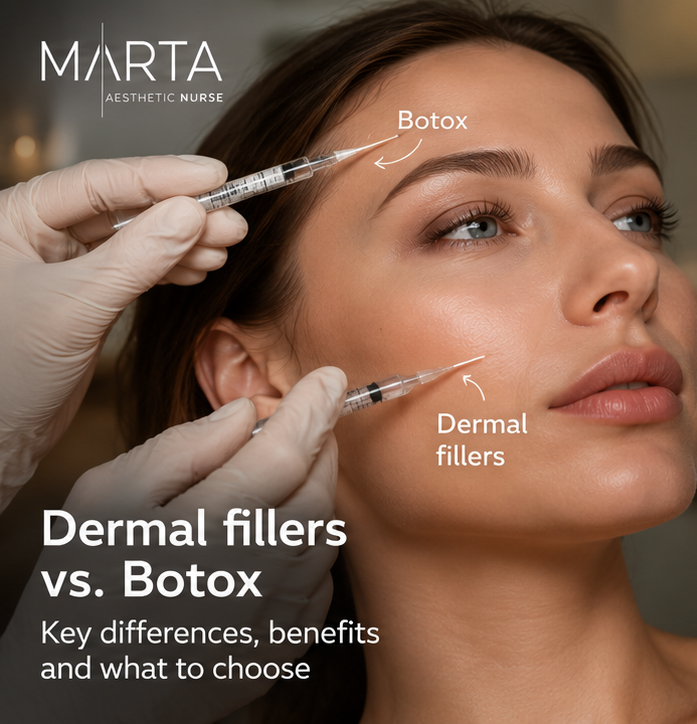
Botox vs. Dermal Fillers: Which Treatment Is Better for Your Face?
What Is Botox and How Does It Work?
Botox is a purified form of botulinum toxin that is injected into specific muscles to temporarily reduce their activity. When those muscles contract less, the skin above them moves less as well, which can soften the appearance of certain expression lines and help prevent them from becoming more pronounced over time.
Because Botox works on muscle movement rather than adding volume beneath the skin, it is generally used for dynamic wrinkles — lines that become more visible when you smile, frown, squint or raise your eyebrows. The treatment is carefully targeted, so the goal is not to stop facial movement altogether but to create a smoother, more relaxed appearance while maintaining natural expression.
The injections are performed with a fine needle and typically take only a short time. There is no need for surgery or a lengthy recovery period, although some temporary redness, swelling or tenderness can occur around the injection sites.
What Can Botox Treat?
Botox is most commonly associated with wrinkles on the upper part of the face. Depending on the individual’s anatomy and treatment goals, it may be used to soften:
- Forehead lines caused by repeatedly raising the eyebrows.
- Frown lines between the eyebrows, sometimes called “11 lines.”
- Crow’s feet around the outer corners of the eyes.
- Certain other lines related to repeated muscle movement.
Botox can also have applications beyond cosmetic wrinkle reduction. In some cases, botulinum toxin is used for concerns such as excessive sweating, muscle-related conditions and other medical indications.
For those considering treatment specifically for facial lines, a facial Botox treatment can be tailored to the areas where muscle activity is contributing to the appearance of wrinkles.
One important distinction is that Botox does not replace lost facial volume. If a concern is caused by hollowing, thinning tissue or a loss of fullness in areas such as the cheeks or lips, a different approach may be more appropriate. This is one of the key factors to consider when comparing Botox with dermal fillers.
What Are Dermal Fillers and How Do They Work?
Dermal fillers are injectable treatments designed to restore or add volume beneath the skin. Unlike Botox, which works by temporarily relaxing targeted muscles, fillers physically add volume to the treated area. Most modern fillers are made with hyaluronic acid, a substance that naturally occurs in the body and helps the skin retain moisture and maintain its structure.
As we age, the face gradually loses collagen, fat and other supportive tissues. This can lead to flatter cheeks, deeper folds, thinner lips or a more tired-looking appearance. Fillers can help restore some of that lost fullness or subtly enhance existing facial features.
The result depends on the type of filler, the amount used and the area being treated. A good treatment should complement the person’s existing facial proportions rather than create an obviously “filled” appearance. This is why the dermal fillers vs Botox decision is usually based on the cause of a particular concern, rather than simply choosing one treatment over the other.
What Can Dermal Fillers Treat?
Fillers can be used in several dermal filler treatment areas, depending on the patient’s anatomy and aesthetic goals.
Common treatment areas include:
- Cheeks, where filler can restore volume and improve facial contours.
- Lips, to enhance volume, definition or symmetry.
- Nasolabial folds, where restoring surrounding volume may soften their appearance.
- Chin and jawline, to improve facial balance and definition.
- Temples, where volume loss can create a more hollow appearance.
Fillers can therefore address concerns that Botox cannot, particularly those related to volume, contour and facial structure. For people interested in addressing several areas while maintaining overall facial balance, facial harmonization with dermal fillers may be considered as part of a personalized treatment plan.

Botox vs. Dermal Fillers: What’s the Difference?
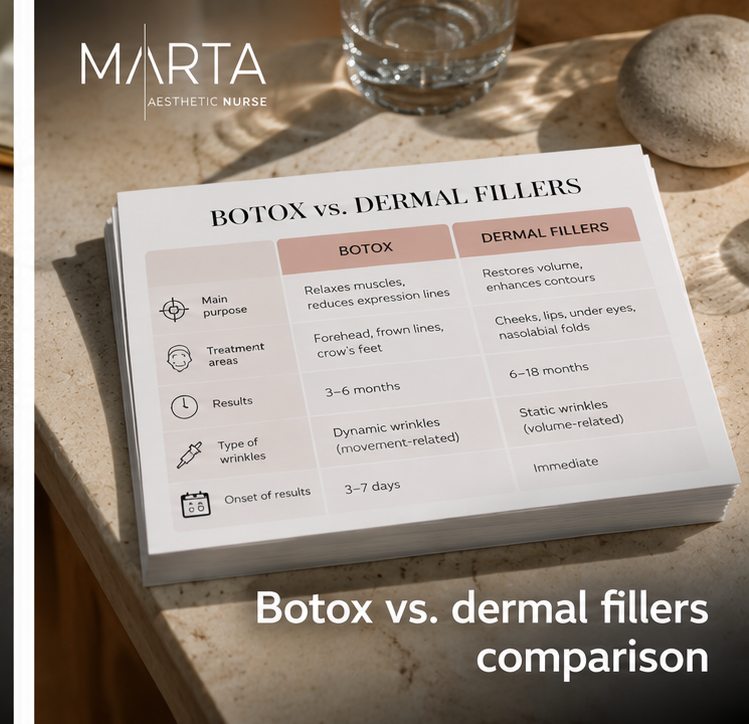
The main difference between Botox and fillers comes down to what they are designed to change. Botox temporarily reduces muscle activity, making it particularly useful for expression-related lines. Dermal fillers, on the other hand, add volume beneath the skin and can restore fullness or enhance facial contours.
In simple terms, Botox works on movement, while fillers work on volume and structure. That distinction is important because two people with similar-looking wrinkles may actually need very different treatments.
When considering Botox vs dermal fillers, it helps to look at the concern rather than the treatment itself. For example, forehead lines that appear when you raise your eyebrows are related to repeated muscle movement, while flatter cheeks or thinner lips are more closely associated with volume loss or a desire for added definition.
Botox |
Dermal fillers |
|
Main action |
Relaxes targeted muscles |
Adds or restores volume |
Common uses |
Forehead lines, frown lines, crow’s feet |
Cheeks, lips, folds and facial contour |
Best suited to |
Dynamic wrinkles |
Volume loss and structural concerns |
Results |
Develop gradually |
Often visible immediately |
Typical longevity |
Around 3–4 months |
Varies by product and treatment area |
Neither option is universally better. The right choice depends on what is causing the concern, the area being treated and the result you want to achieve. In some cases, using both approaches can provide a more balanced result.
Botox vs. Fillers: Which Treatment Is Better for Different Facial Concerns?
There is no single treatment that is best for every facial concern. The choice usually depends on whether the problem is related to muscle movement, volume loss, or changes in facial contours. For that reason, Botox vs dermal fillers for wrinkles is not always a straightforward choice.
Botox is generally more suitable when repeated muscle contractions are causing lines to become visible. Dermal fillers may be a better option when the concern involves lost fullness or a change in facial shape.
For example:
- Forehead and frown lines. Botox is often the more appropriate option when these lines are caused by facial muscle activity.
- Crow’s feet. Botox can soften lines that appear when smiling or squinting.
- Cheek volume. Fillers can restore fullness and improve facial contours, making them more relevant for concerns involving the cheeks.
- Lips. Fillers can add volume and definition, while Botox may sometimes be used in specific techniques to subtly alter the appearance of the upper lip.
- Deep folds or hollow areas. Fillers can provide volume where tissue has become thinner or less supported.
When considering Botox vs dermal fillers for cheeks, for instance, the goal matters just as much as the area itself. Someone looking to restore lost cheek volume may benefit from filler, while someone concerned about nearby expression lines may need a different approach.
Botox also has uses beyond facial aesthetics. Depending on the condition being treated, medical Botox treatments may be used under appropriate medical guidance.
The best choice is therefore based on the cause of the concern, your facial anatomy and the result you want to achieve rather than simply choosing the more popular treatment.
Can You Get Botox and Dermal Fillers Together?
Yes. Botox and dermal fillers can be used as part of the same treatment plan because they address different aspects of facial aging. Botox reduces the activity of targeted muscles, while fillers restore or add volume. Using them together can therefore make sense when a person has both expression lines and volume loss.
For example, someone may use Botox to soften forehead or frown lines while using filler to restore fullness in the cheeks or lips. Combining treatments does not necessarily mean treating more areas; the goal is to address specific concerns without over-treating the face.
A qualified injector should determine:
- Which concerns are caused by muscle movement.
- Where volume has been lost or could improve facial balance.
- Whether both treatments are actually necessary.
- How much product is appropriate for a natural-looking result.
The treatments may be performed during the same appointment or planned separately, depending on the individual’s needs and the practitioner’s approach. A personalized assessment is important because combining procedures should be based on facial anatomy and treatment goals rather than following a standard formula.
Botox vs. Dermal Fillers: Results, Recovery and Longevity
When comparing Botox vs dermal fillers, the timeline and duration of results are also important. Botox does not work instantly. Most people begin to notice an effect within several days, with results typically lasting around three to four months.
Dermal fillers can provide a more immediate change, although the exact timeline depends on the product and treatment area. Hyaluronic acid fillers, for example, generally produce visible results right away, while swelling may temporarily affect the final appearance. Many fillers last several months, but longevity varies considerably by product and location.
Recovery is usually relatively short for both treatments, but some temporary effects are normal:
- Botox: mild redness, swelling or tenderness at injection sites may occur.
- Fillers: swelling, bruising, redness or tenderness can be more noticeable, particularly in areas such as the lips.
Most people can return to normal activities quickly, although aftercare instructions may include temporarily avoiding strenuous exercise, excessive sun exposure or touching the treated area.
The Botox vs dermal fillers comparison therefore comes down to more than how long each treatment lasts. The treatment area, product used, amount injected and individual response all influence the final result and how often maintenance is needed.
Which Is Right for You?
So, which is better dermal fillers or Botox? There is no universal answer. The right treatment depends on what you want to change and what is causing the concern in the first place.
As a general guide, Botox may be more appropriate when:
- Wrinkles are mainly caused by repeated facial expressions.
- You want to soften forehead lines, frown lines or crow’s feet.
- You prefer a treatment that does not add facial volume.
Fillers may be more suitable when:
- Your face has lost volume with age.
- You want fuller or more defined lips.
- You would like to enhance cheek, chin or jawline contours.
- Hollow or sunken areas are affecting facial balance.
Some people may benefit from both treatments, while others may not need either one. The goal should be to choose the least invasive option that can address the specific concern and produce a result that still looks like you.
Botox can also be used for certain concerns beyond facial aesthetics, so Botox for body concerns may be considered when the treatment goal extends beyond the face.
If you are wondering which one is better Botox or fillers, the most useful starting point is not the product itself but an assessment of your facial anatomy, skin and treatment goals.
Why Professional Assessment Matters?
Choosing between Botox and dermal fillers is not simply a matter of deciding which treatment is more popular. A professional assessment looks at your facial anatomy, muscle movement, skin, existing volume and the changes you want to make. This helps determine whether one treatment, a combination of both, or an entirely different approach is more appropriate.
It is also worth discussing your medical history, medications, previous cosmetic treatments and any concerns you have before receiving injections. These details can affect treatment planning and help your provider identify potential risks.
If you are still wondering what is the difference between Botox and fillers, a consultation can make that distinction much more practical. Instead of choosing a treatment based on a single facial concern, a qualified practitioner can assess what is actually causing it and explain what each option can realistically achieve.
A consultation with Aesthetic Nurse Marta can also give you an opportunity to discuss the product being used, expected results, possible side effects, recovery and whether the treatment is appropriate for your goals.
Frequently Asked Questions
Is Botox better than dermal fillers?
What is the main difference between Botox and fillers?
Is Botox or filler better for wrinkles?
Which lasts longer, Botox or dermal fillers?
Can Botox and dermal fillers be used together?
Are dermal fillers better for restoring facial volume?
Which treatment is better for lips, Botox or fillers?
How do I know whether Botox or fillers are right for me?
If you are considering Botox or dermal fillers, request a personalized assessment to discuss your facial anatomy and treatment goals: consultation request.
Ready to discuss your options? Contact Aesthetic Nurse Marta to book a consultation.

Aesthetic Nurse Marta
Botox and dermal fillers address different concerns. Botox works on muscle movement, while fillers restore or add volume.
Botox is commonly used for dynamic lines such as forehead lines, frown lines and crow’s feet. Dermal fillers may be considered for areas where added volume or definition is the goal, such as the cheeks or lips.
Neither treatment is universally better. The right option depends on your facial anatomy, the concern you want to address and the result you are looking for. In some cases, both treatments may be part of a personalized plan.
A consultation can help you understand the options, expected results, possible side effects and aftercare before deciding on treatment.
Considering Botox or dermal fillers? Start with a personalized assessment to discuss your goals and treatment options.