
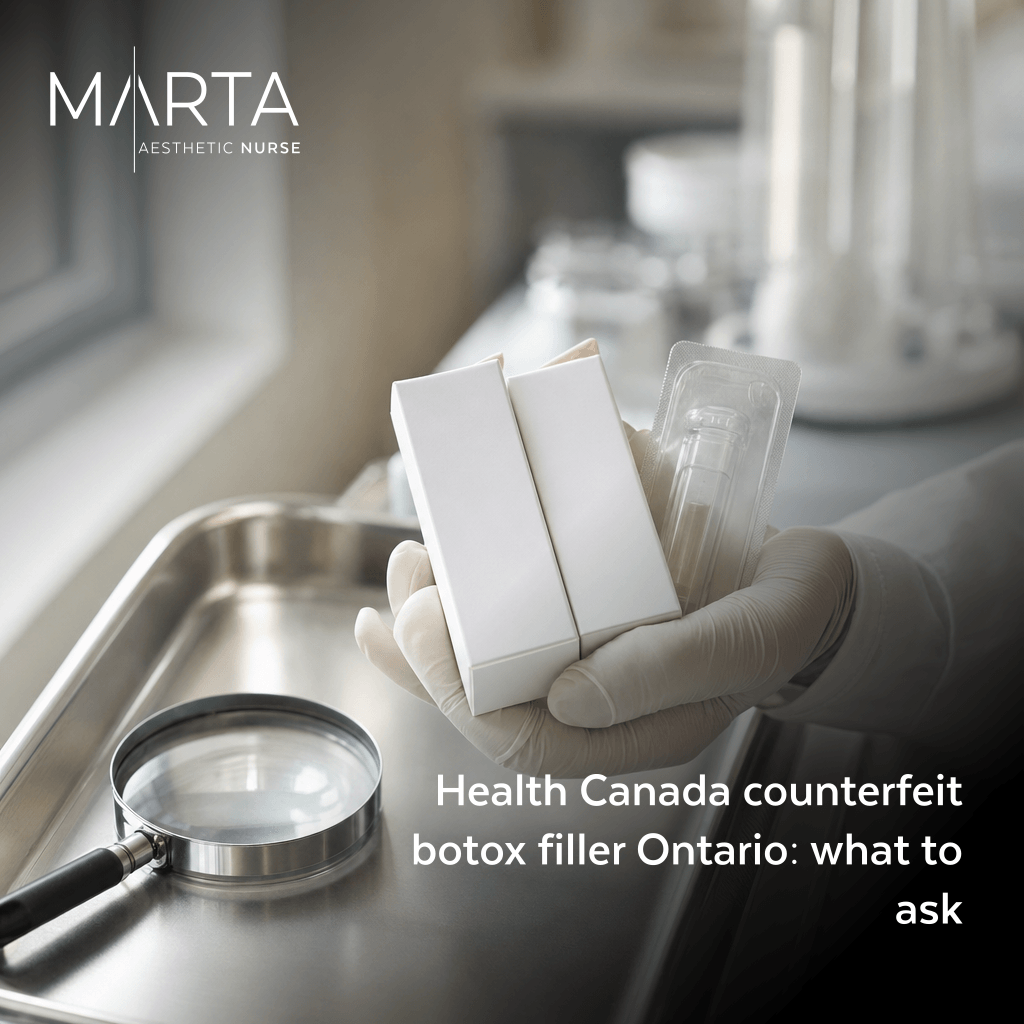
A practical checklist for verifying authorized injectables before any aesthetic injection in the GTA
If you are researching injectables in Ontario, it helps to know what “unauthorized” and “counterfeit” can mean in real life, and what you can reasonably ask to see before anything is injected.
Health Canada published a public advisory dated 2026-08-13 about unauthorized and counterfeit injectable health products seized from a business in Hamilton, Ontario. In the advisory, Health Canada reminds consumers to avoid unauthorized products and to verify authorization identifiers like a DIN, NPN, or DIN-HM when receiving injectable treatments.
This matters whether you are booking aesthetic injections for the first time or trying to make sense of a result you got elsewhere. Product verification is one of the simplest safety checks you can do as a client, and a careful provider should be comfortable with those questions.
What Health Canada’s advisory means for a patient
Health Canada’s alert is about unauthorized and counterfeit injectable health products that were sold online and seized from a business in Hamilton, Ontario. The key patient takeaway is straightforward: some injectable products in the market can fall outside Health Canada authorization, and packaging can be part of how a product is misrepresented.
From a decision standpoint, this changes the consultation conversation. It becomes reasonable to ask, before you proceed with any injectable treatment, how the clinic verifies that what is being used is authorized for sale in Canada.
“Unauthorized” and “Counterfeit” in plain terms
Health Canada’s advisory uses the words “unauthorized” and “counterfeit” in the context of injectable health products. For you, the practical point is that the product in the room may not match what you think you are receiving, and it may not be authorized for sale in Canada.
Instead of relying on a clinic’s marketing language, focus on product identity: what it is, and whether it carries Canadian authorization identifiers on its labeling.
How to verify authorized injectables in Canada, using identifiers
Health Canada specifically reminds consumers to verify authorization identifiers like a DIN, NPN, or DIN-HM when receiving injectable treatments. You do not need to become an expert to use this. You only need to feel comfortable asking to see the original packaging and labeling before treatment.
What you can politely ask to see, before anything is opened
Two things can be true at once: you want a refined, natural-looking result, and you want transparency about what is being injected. A professional setting should be able to support both.
- Original packaging for the product that will be used.
- Labeling on that packaging.
- Authorization identifiers on the packaging, such as a DIN, NPN, or DIN-HM, as Health Canada describes in its advisory.
A non-obvious point that matters: this is easiest to do before the appointment starts moving quickly. It is part of how a clinic sets the tone for informed consent, because once you are positioned for treatment, it can feel harder to pause and ask to see details.
A safe booking checklist for Ontario (What good process looks like)
If you are booking injectable treatments in the GTA, look for a process that supports verification and documentation. This is not about being suspicious. It is about choosing a clinic that treats transparency as routine.
Three process checks to look for
These are the process basics that support safe care and clear communication, especially for treatments like full face Botox and dermal fillers, where the product choice and plan should be individualized.
- Regulated provider. Book with a provider who is regulated to provide aesthetic services in Ontario, so there is accountability to professional standards.
- Documented consent. You should be offered a consent process that is documented, not verbal only.
- Transparent product verification. The clinic should be comfortable showing original packaging and relevant authorization identifiers, and answering questions about what you are receiving.
If you are seeking a more holistic plan rather than an isolated injection, a structured consultation can also help: facial harmonization is an example of a full-face planning approach where product choice, placement decisions, and your personal goals are discussed together.
If you have already had treatment elsewhere and you are unsure about the product
Some people find this topic after a result they do not understand, or because they are trying to confirm what they were given. In that situation, your best next step is a consult where you bring any documentation you were given, and you ask direct questions about product identity and verification.
At Aesthetic Nurse Marta, we treat these questions as normal. Aesthetic medicine works best when you feel informed, respected, and able to pause the process to ask for clarity.
Health Canada’s 2026-08-13 advisory is a useful reminder that the “what exactly is being injected” question belongs in every aesthetic consultation. Asking to see original packaging, labeling, and authorization identifiers like a DIN, NPN, or DIN-HM can be part of informed consent, not an awkward extra.
Frequently Asked Questions
What did Health Canada warn about?
A public advisory dated 2026-08-13 about unauthorized and counterfeit injectable health products that were sold online and seized from a business in Hamilton, Ontario. Health Canada reminds consumers to avoid unauthorized products and to verify authorization identifiers when receiving injectable treatments.
How can I check that an injectable is authorized in Canada?
Ask to see the original packaging and labeling for the product that will be used, and look for authorization identifiers such as a DIN, NPN, or DIN-HM, as Health Canada describes in its advisory.
When is the best moment to ask?
Before the appointment starts moving quickly. Once you are positioned for treatment it can feel harder to pause and ask, so raising it at the start is part of how a clinic sets the tone for informed consent.
What should a safe booking process look like in Ontario?
A provider who is regulated to provide aesthetic services in Ontario, a consent process that is documented rather than verbal only, and a clinic that is comfortable showing original packaging and authorization identifiers and answering questions about what you are receiving.
If you want a nurse-led, anatomy-first assessment and a plan built around facial balance, start with a consultation: request a personalized injectable consultation.
Contact Aesthetic Nurse Marta to request an appointment or ask a question.
Keep reading
 Lip Filler and Cold Sores: How to Plan if You Get HSV1If you get cold sores, it is completely reasonable to wonder whether lip filler will trigger…Click to read more
 How Long Lip Filler Lasts and Why It Varies Person to PersonHealth Canada notes a range, and the lips are a high movement area that can affect how long you…Click to read more
 Update: Ontario Nursing Regulator Issues New Aesthetic Services GuidelineIf you are researching injectable treatments in the GTA, your main job is choosing the right…Click to read more